Throughout history, gemstones have held profound significance across diverse cultures, serving as symbols of power, protection, healing, and spirituality. From ancient civilizations to modern societies, these precious stones have been revered for their beauty and imbued with symbolism that transcends geographical boundaries. Let’s embark on a journey to explore the rich tapestry of symbolic stones across cultures, delving into their meanings, myths, and cultural significance.

- Ancient Egypt:
- In ancient Egypt, gemstones played a central role in religious and spiritual practices. The Egyptians believed that certain stones possessed magical properties and were imbued with the essence of the gods.
- Lapis Lazuli was highly prized and associated with the sky goddess, Hathor, representing wisdom, truth, and cosmic harmony. It was often used in jewelry, amulets, and burial rituals.
- Another significant stone was turquoise, symbolizing protection, prosperity, and divine favor. It was commonly used in amulets and jewelry worn by both the living and the deceased.
- Ancient Greece and Rome:
- In ancient Greece and Rome, gemstones were closely linked to mythology and astrology, with each stone associated with specific gods, planets, and zodiac signs.
- The amethyst, for example, was believed to ward off intoxication and was associated with the god Dionysus. It was also thought to enhance spiritual awareness and promote clarity of mind.
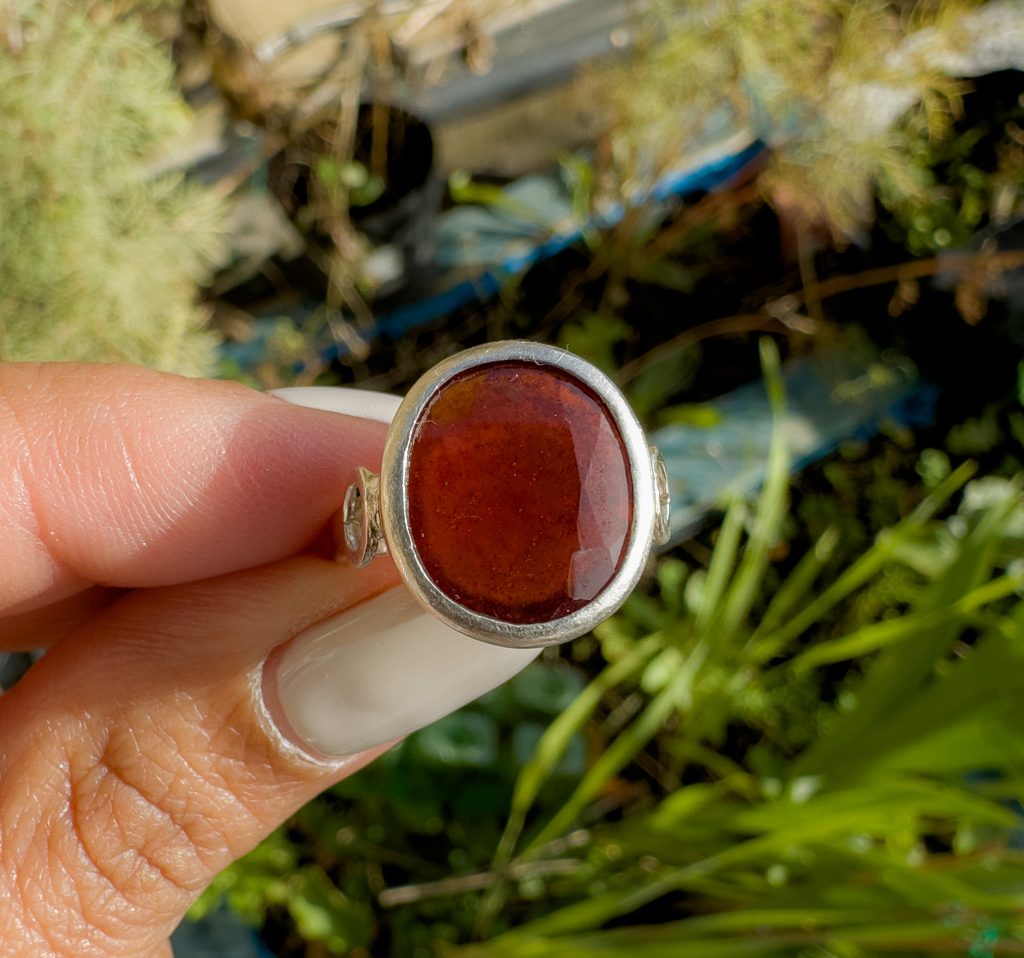
- The garnet symbolized passion, vitality, and regeneration, and was associated with the goddess Persephone, who ruled over the underworld.
- The Greeks called rutilated quartz ‘hair of Aphrodite’, while the Roman’s referred to it as ‘hair of Venus’ and these morphed into later associations with love and romance, with the name ‘Cupid’s Dart’ as well as the aforementioned ‘Flèches D’amour’. The gems have also been compared to a firework display.
- Eastern Cultures:
- In Eastern cultures such as China and India, gemstones have been revered for their auspicious qualities and healing properties.
- Jade holds immense significance in Chinese culture and is associated with longevity, prosperity, and purity. It was used to create precious artifacts, ceremonial objects, and imperial jewelry.
- In India, the ruby is known as the “king of gemstones” and is considered a symbol of power, passion, and protection. It was believed to bestow blessings from the sun god, Surya, and was often worn by royalty and warriors.
- Sulemani Hakik is believed to possess powerful protective properties, guarding against negative energies, evil eye, and black magic. It is often worn as an amulet or talisman for spiritual protection and well-being. Sulemani Hakik typically has a smooth and polished surface, with bands of white, gray, or cream running through the dark background. These bands vary in thickness and pattern, giving each stone a unique and captivating appearance. It is highly regarded in various cultural and spiritual traditions, including Hinduism, Islam, and Tibetan Buddhism, where it is used in rituals, ceremonies, and as a sacred stone.
- Indigenous Cultures:
- Indigenous cultures around the world have their own unique traditions and beliefs surrounding gemstones.
- For Native American tribes, turquoise is considered a sacred stone, representing the sky, water, and earth. It is believed to offer protection, healing, and spiritual guidance.
- In Australian Aboriginal culture, opals are revered as symbols of creation and spirituality, with each opal believed to contain a unique story or dreamtime narrative.
| Stone | Culture | Meanings and Beliefs |
|---|---|---|
| Sulemani Hakik | South Asia, Middle East | Protection, balance, stability, spiritual growth |
| Lapis Lazuli | Ancient Egypt, Mesopotamia | Wisdom, truth, cosmic harmony, royalty |
| Turquoise | Native American, Ancient Egypt | Protection, prosperity, divine favor |
| Jade | China, Central America | Longevity, prosperity, purity, protection |
| Amethyst | Ancient Greece, Rome | Sobriety, spiritual awareness, clarity of mind |
| Garnet | Ancient Egypt, Middle Ages | Passion, vitality, regeneration, love |
| Ruby | India, Ancient Rome | Power, passion, protection, vitality |
| Opal | Australia, Ancient Rome | Creation, spirituality, emotional healing |
| Turquoise | Native American, Ancient Egypt | Protection, prosperity, divine favor |
| Pearl | Various cultures | Purity, innocence, wisdom, fertility |


Across cultures and civilizations, symbolic stones have served as powerful symbols of meaning, embodying the values, beliefs, and aspirations of humanity. From ancient Egypt to modern-day societies, these precious stones continue to inspire awe and reverence, connecting us to our shared history and the mysteries of the universe. As we explore the symbolic stones across cultures, we gain a deeper appreciation for the enduring beauty and significance of these timeless treasures.
Pingback: Spiritual Meaning of Stone: Ancient Wisdom & Symbolism